Peptides 101
What are peptides?
Explained simply.
Peptides 101
- 2–50
- Amino acids in a peptide
- Keys
- That fit cell locks
- 11
- Free infographics
Letters, words and books
Picture the alphabet. are the letters: there are 20 main ones, and your body gets them from the protein you eat.
- • One amino acid = one letter (or one toy bead).
- • A peptide = a short word: about 2 to 50 amino acids linked in a specific order.
- • A protein = a whole book: 50 or more amino acids, folded into a 3D shape (like muscle, enzymes and antibodies).
The order is everything. "Listen" and "silent" use the same letters but mean different things. Change the order of amino acids and you get a different peptide with a different job.
Your body already runs on peptides
You make thousands of peptides every day. They're your body's text messages:
Glutathione · 3 amino acids
Your body's main antioxidant, made in every cell.
Oxytocin · 9 amino acids
Bonding, labor and breastfeeding.
GLP-1 · 30 amino acids
The fullness hormone your gut releases after meals. Lasts only about 2 minutes.
Insulin · 51 amino acids
The key that lets sugar into your cells.
How a peptide works: a key in a lock
- It travels. The peptide moves through your blood.
- It finds its lock. Its exact shape fits one kind of on certain cells, like a key that only opens one door.
- It flips a switch. When it locks on, it starts a chain reaction of signals inside the cell.
- The cell does a job. Release insulin, feel full, make collagen, repair tissue, depending on the peptide and the cell.
That's why peptides can be so targeted: the key only works where its lock is. It's also why each one needs its own safety testing; a key that opens one door in a lab dish may open others in the body.
Why can't I just take amino acids?
An amino acid supplement is a bag of loose letters. Your body uses them as building material, which is useful for muscle, but it doesn't snap them into a specific peptide on command. Taking loose amino acids won't create BPC-157 or GLP-1, just like a box of LEGO bricks won't build a specific car without the instructions.
Why most peptides are injected
Your stomach is built to digest protein, so it chops swallowed peptides back into loose amino acids before they can work. That's why most peptide medicines are small injections under the skin.
- • A few are pills with special helpers to survive the stomach (oral semaglutide, Rybelsus and the Wegovy pill).
- • Some work on the skin itself, like GHK-Cu creams.
- • Collagen "peptides" you add to coffee are food: they're digested for their amino acids, not used as signals.
How scientists made a 2-minute hormone last a week
Your own is destroyed in about 2 minutes. Scientists changed a few "letters" so enzymes can't cut it, then added a fatty-acid hook that lets it ride on albumin, a protein that stays in your blood for weeks. That's how semaglutide lasts about a week. Tirzepatide and retatrutide added second and third "docks" (GIP and glucagon receptors).
Peptides are not steroids
Steroids (like testosterone) are built from cholesterol and enter cells directly. Peptides are amino-acid chains that signal from the outside of the cell. Different chemistry, different effects and different risks.
Approved medicines vs research peptides
Approved peptide medicines
Tested in large human trials, made to pharmaceutical standards, prescribed by a doctor.
- • Insulin (diabetes, since the 1920s)
- • Semaglutide, tirzepatide, liraglutide (diabetes and weight)
- • Tesamorelin (HIV-related belly fat)
- • Teriparatide (osteoporosis)
- • Oxytocin (labor)
- • Leuprolide and octreotide (hormone conditions and some cancers)
- • Elamipretide / SS-31 (Barth syndrome only)
"Research" peptides
BPC-157, TB-500, MOTS-c, KPV, AOD-9604, CJC-1295, ipamorelin and blends like GLOW and KLOW.
- • Evidence is mostly from animals and cells, not large human trials.
- • Sold "for research use only": the dose, purity and sterility aren't guaranteed.
- • No single test proves a vial is safe: purity (HPLC), identity (mass spectrometry), quantity, sterility, endotoxin and heavy metals each answer a different question. See the testing guide below.
- • In 2026 an FDA panel voted to let pharmacies compound some of them; that isn't approval or proof they work.
Peptides 101 infographics
Tap to view full size, or download to save and share.
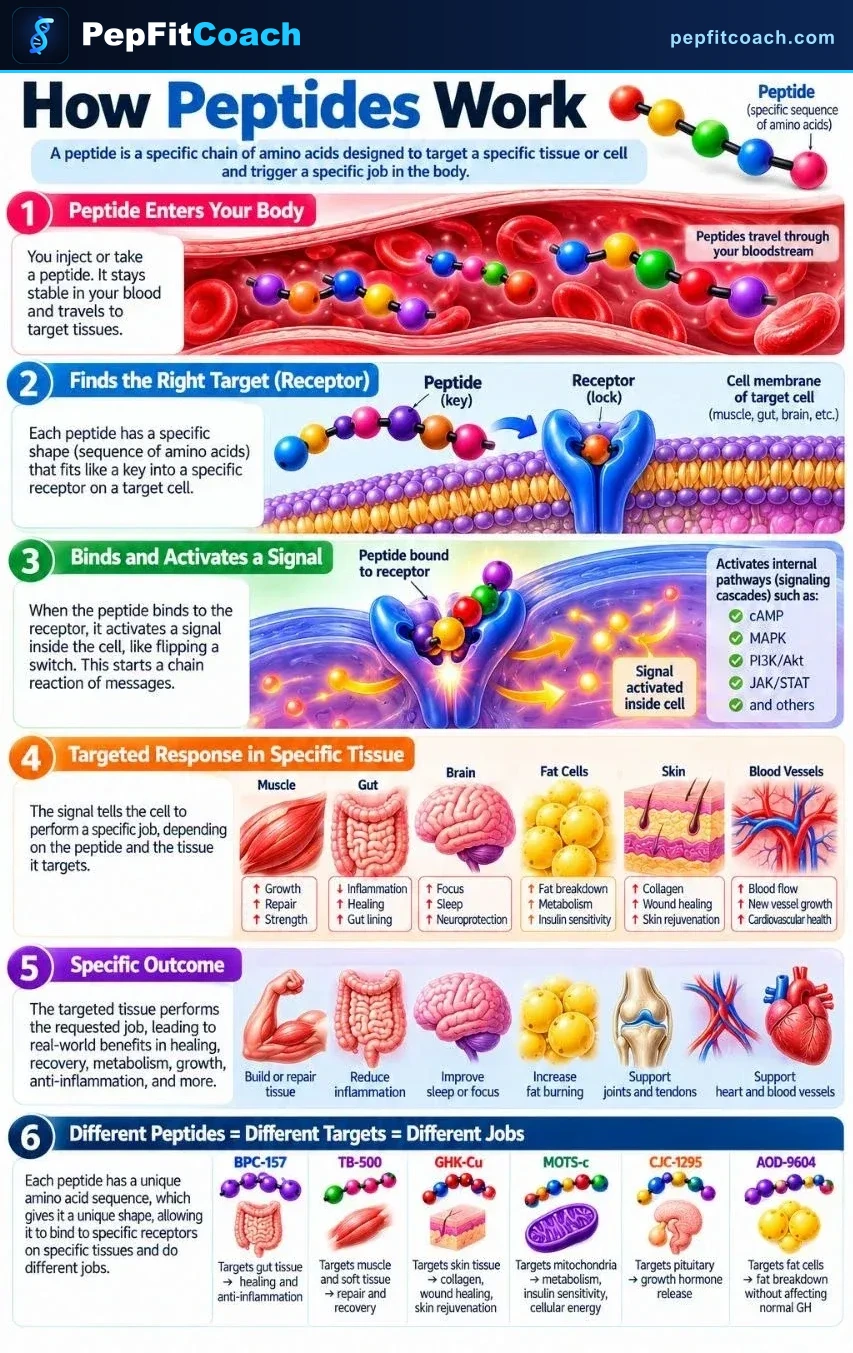
How peptides work
From your bloodstream to the receptor, the signal and the job it triggers.
⬇ Download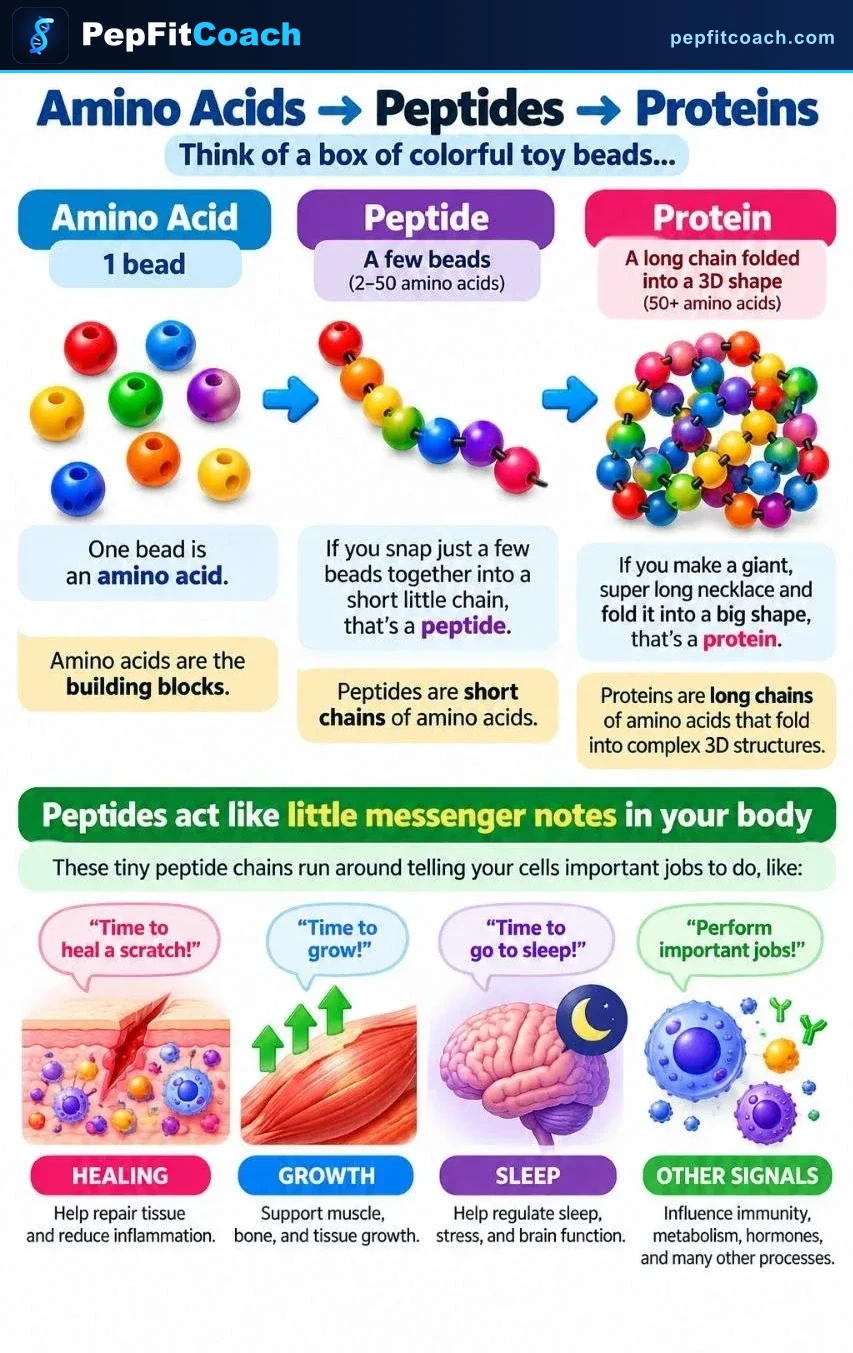
Amino acids → peptides → proteins (beads)
The toy-bead version: one bead, a short chain, a big folded necklace.
⬇ Download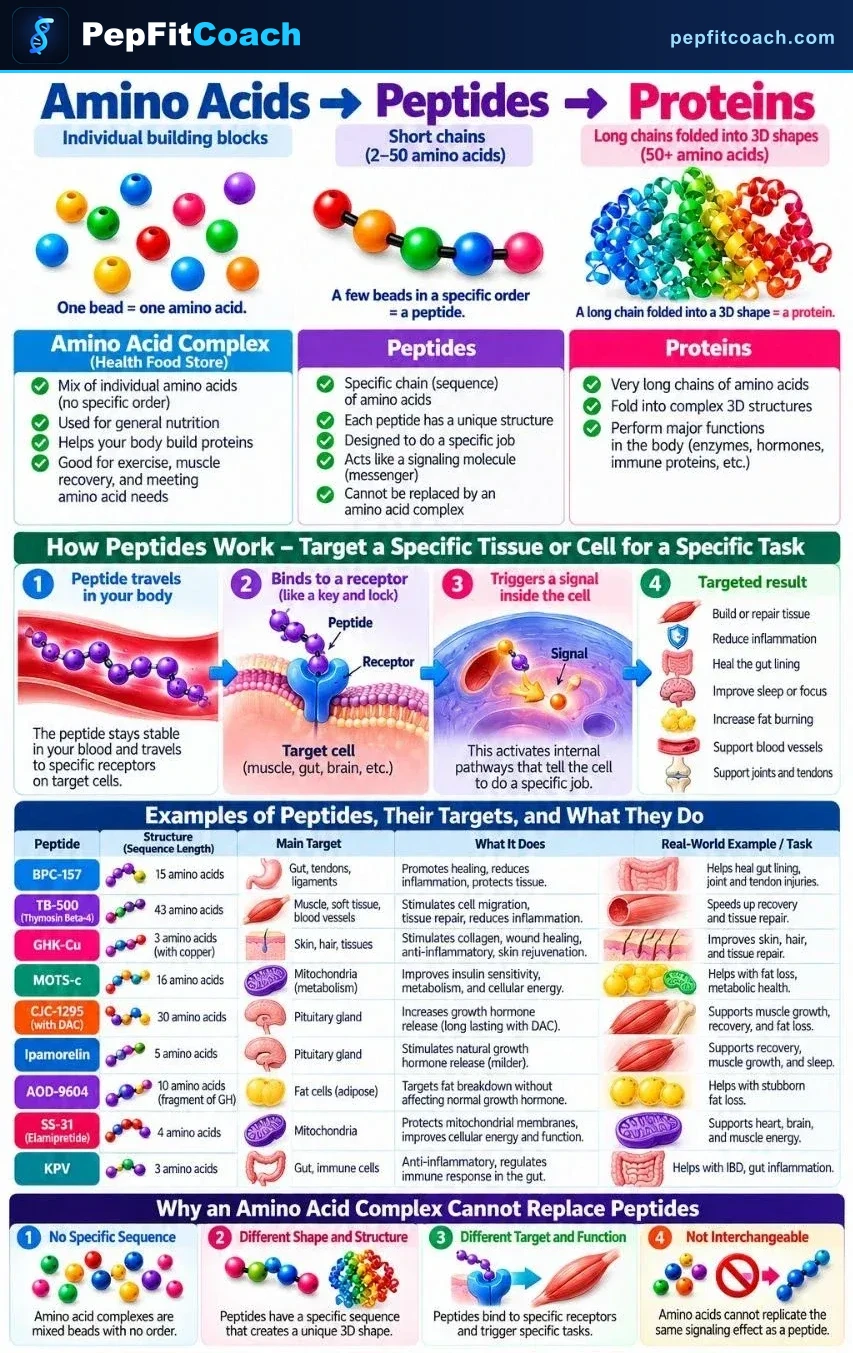
Amino acids, peptides and proteins: the chart
Side by side, with examples of peptides and their targets.
⬇ Download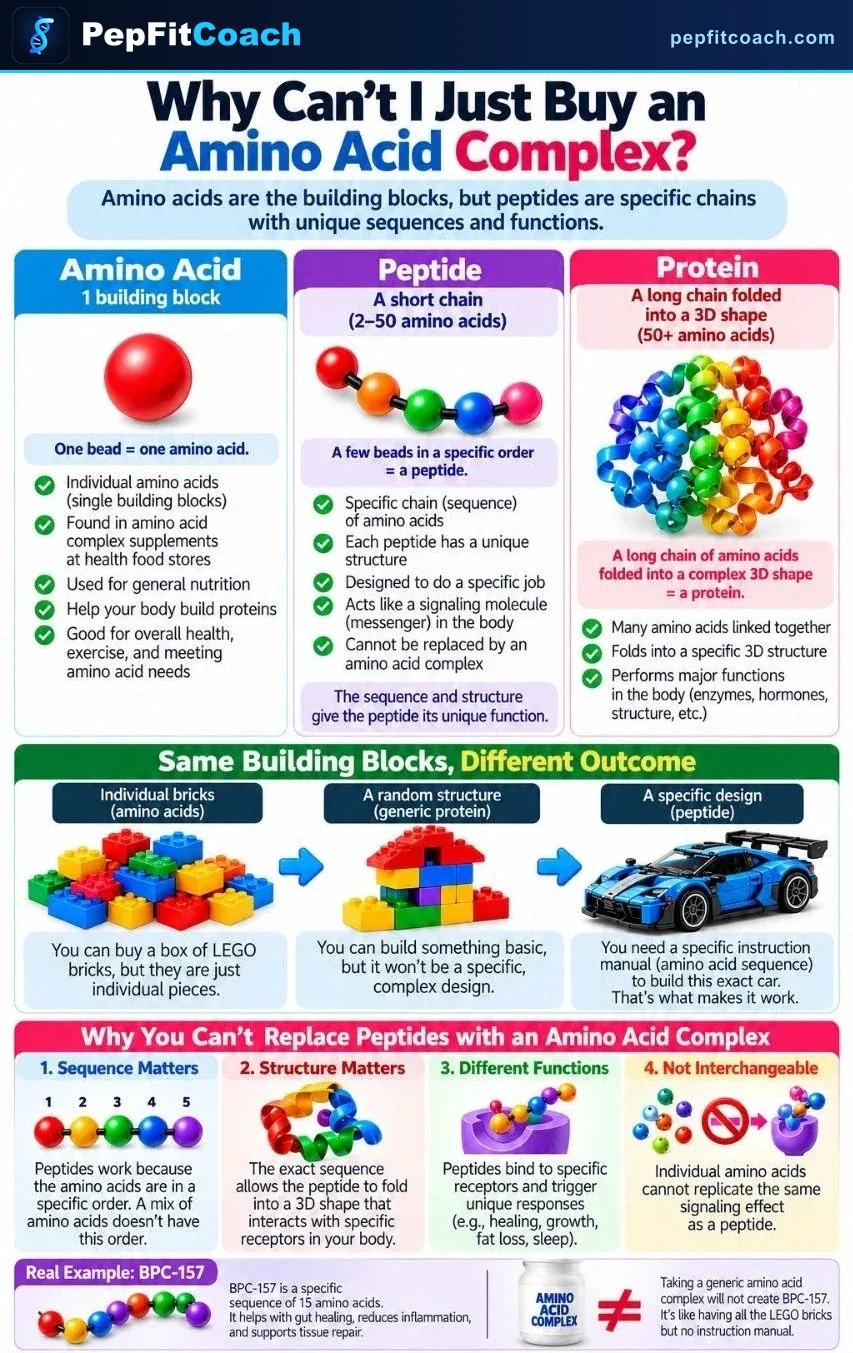
Why can't I just buy an amino acid complex?
Same building blocks, different outcome: sequence and shape matter.
⬇ Download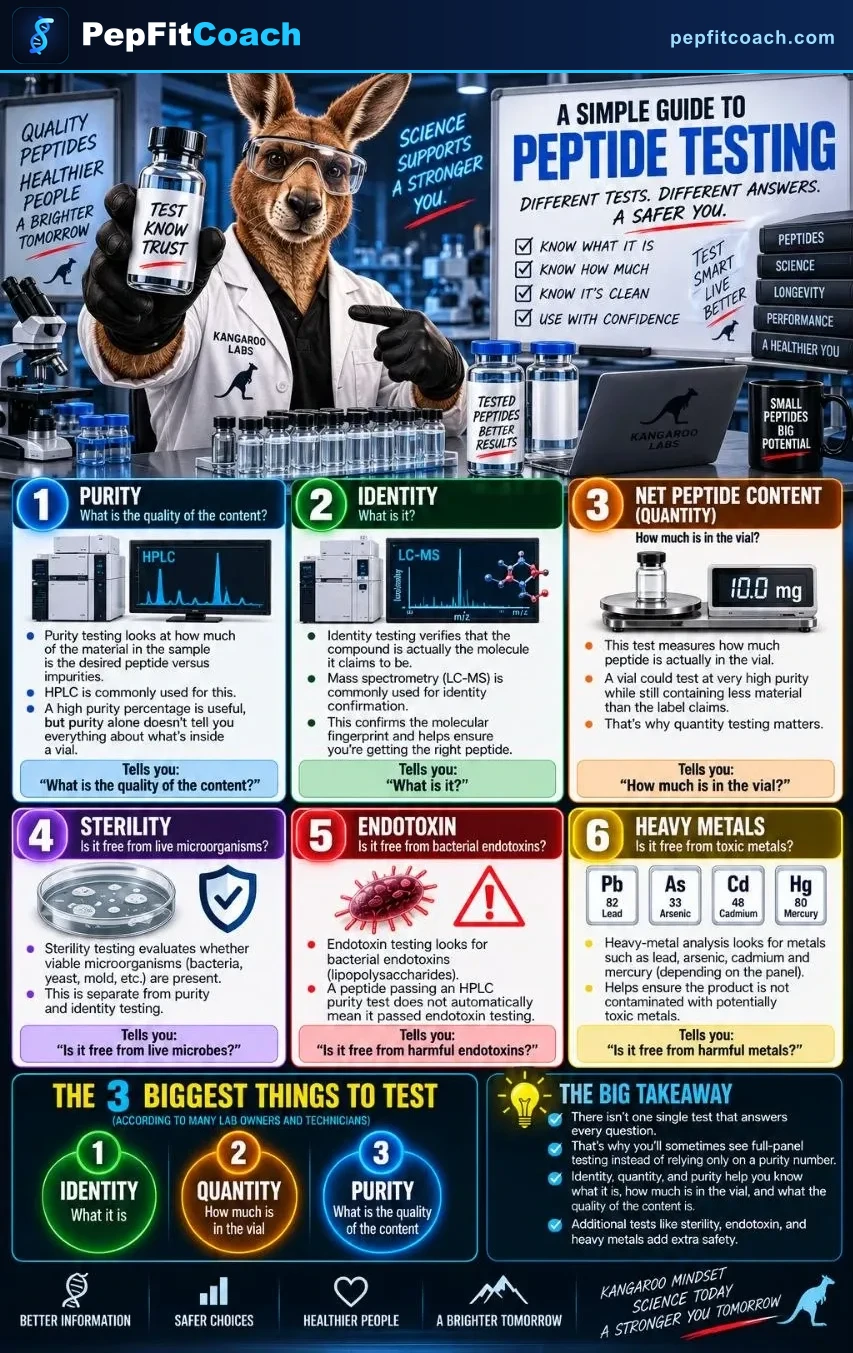
A simple guide to peptide testing
Purity, identity, quantity, sterility, endotoxin and heavy metals: what each test tells you.
⬇ Download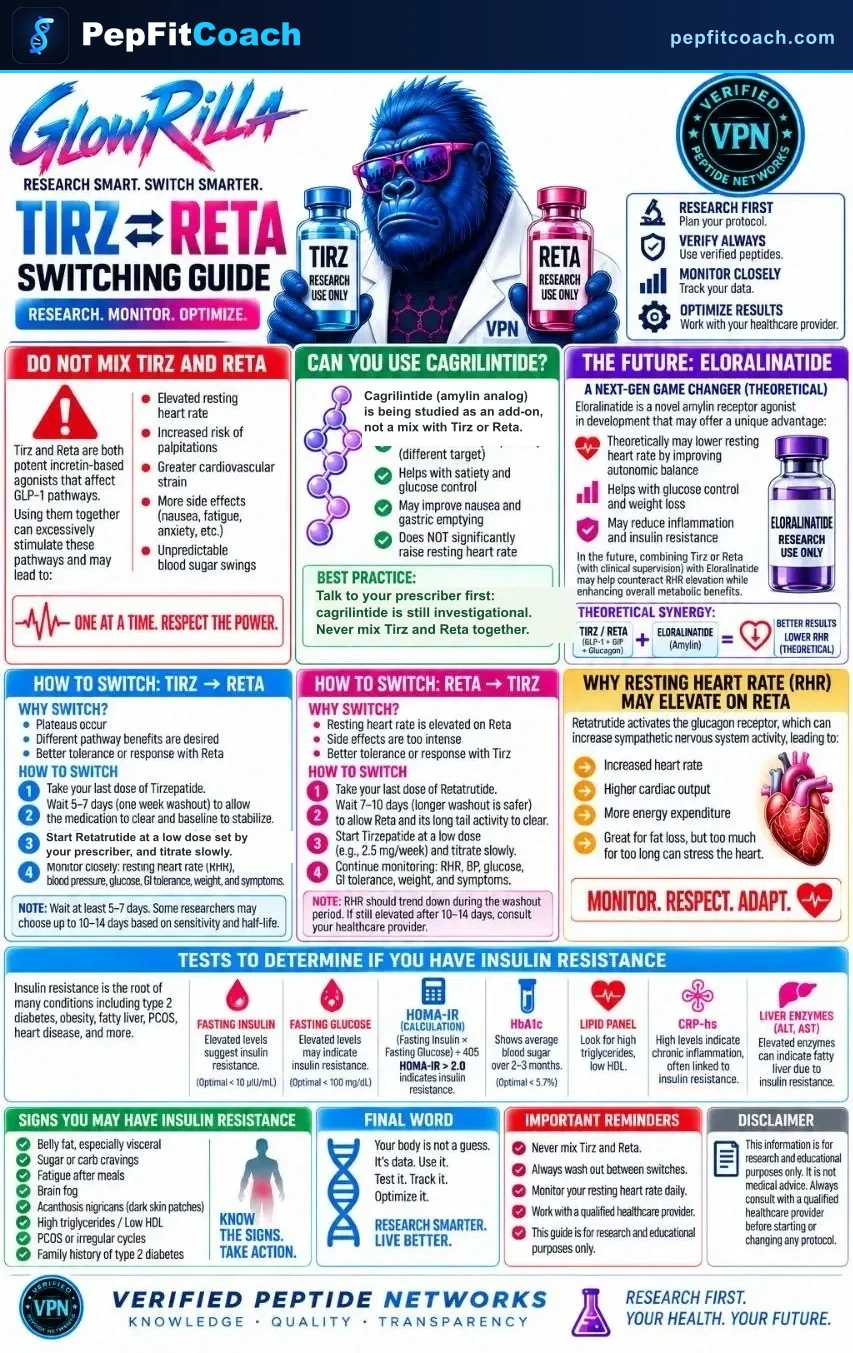
Tirz ⇄ Reta switching overview
Never mix them, why heart rate rises on reta, and how amylin fits.
⬇ Download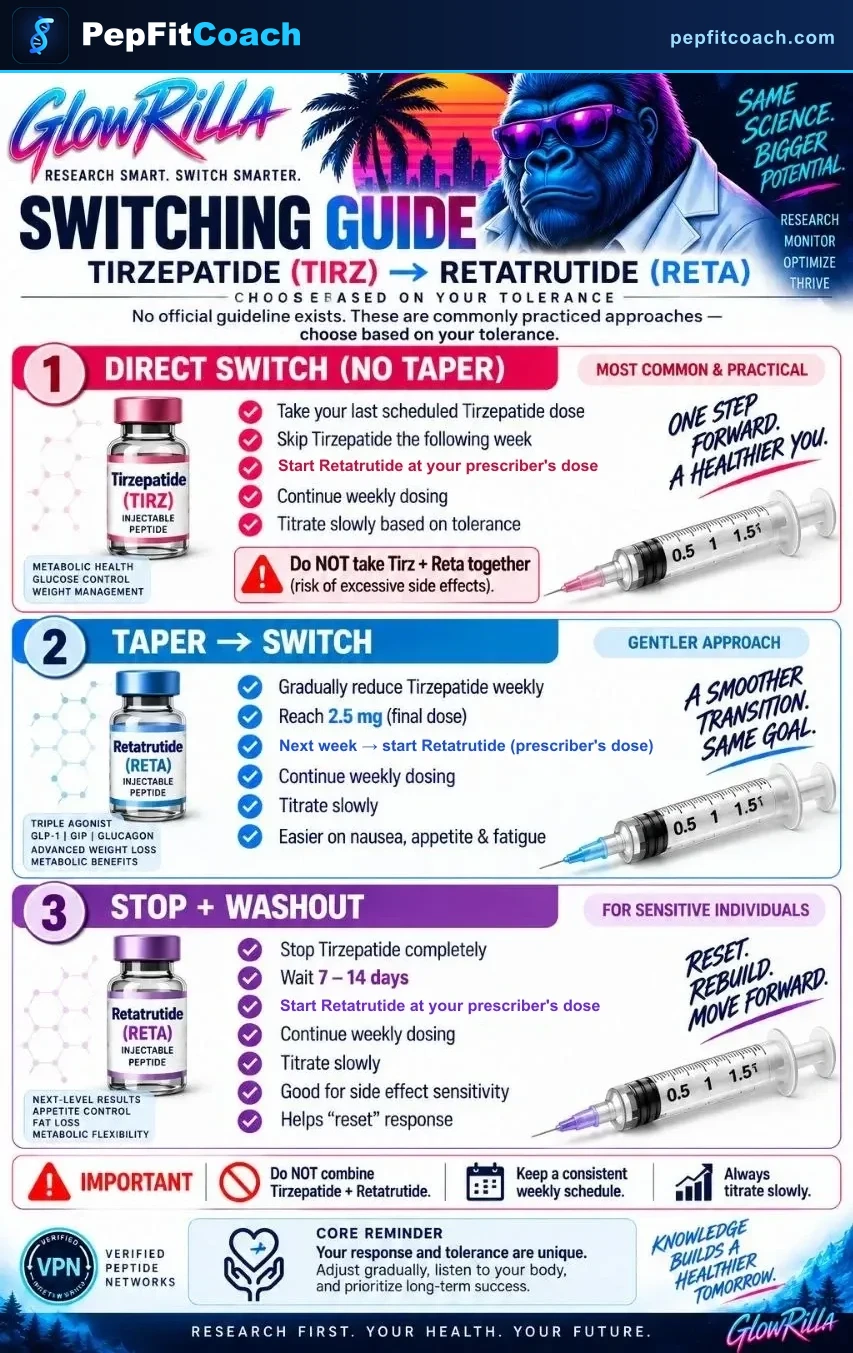
Switching tirzepatide → retatrutide
Direct switch, taper or washout; your prescriber sets the dose.
⬇ Download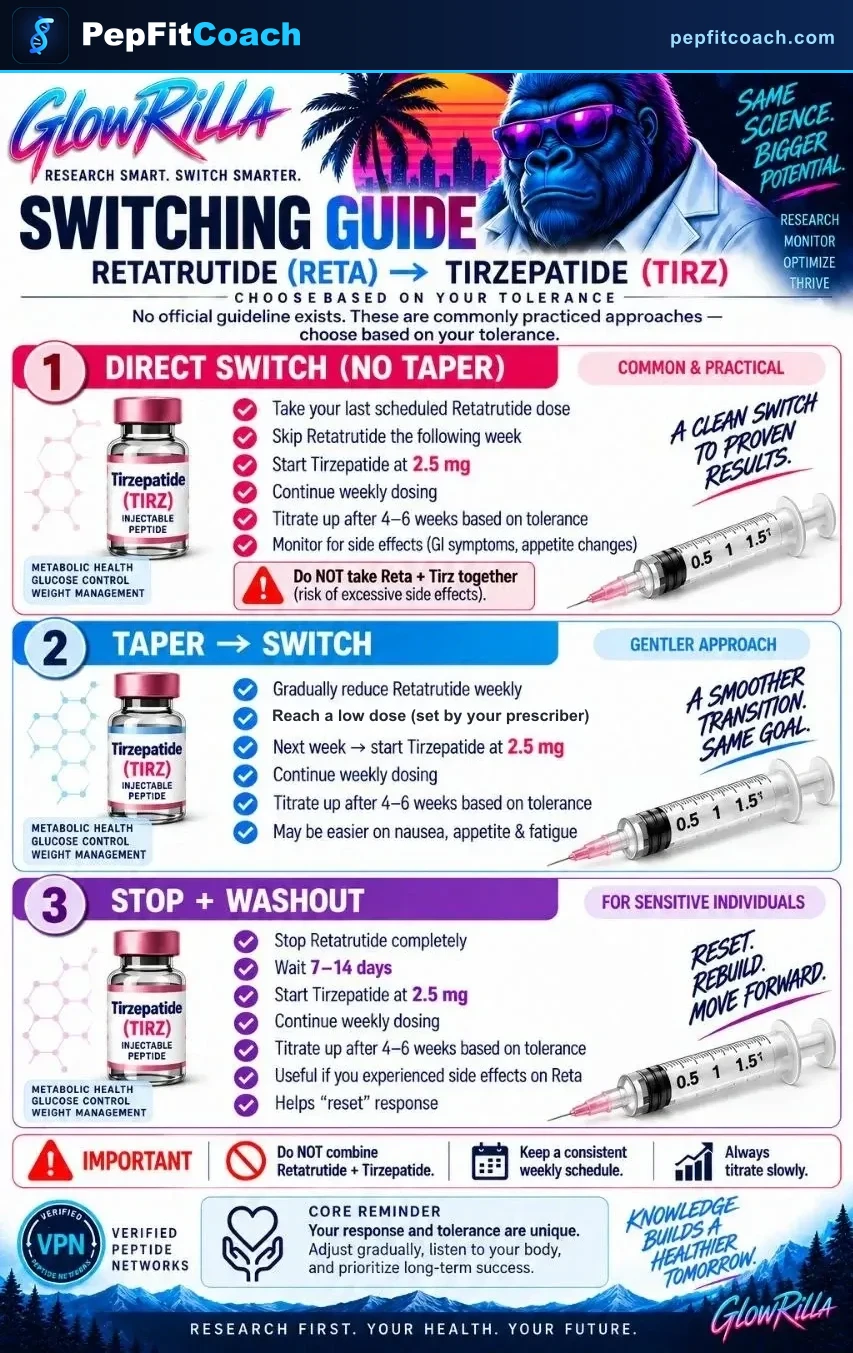
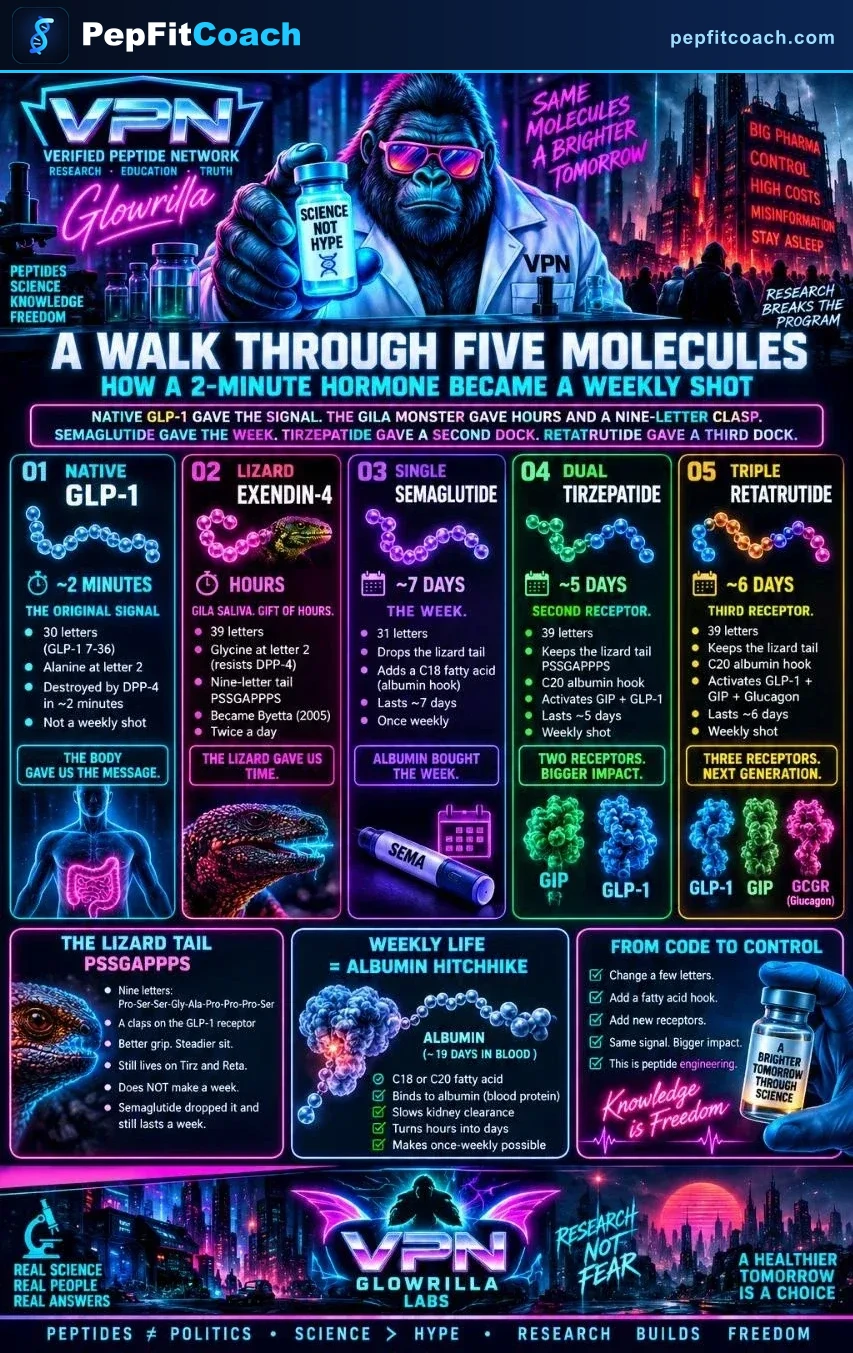
Five molecules: how a 2-minute hormone became a weekly shot
Native GLP-1, exendin-4, semaglutide, tirzepatide and retatrutide.
⬇ Download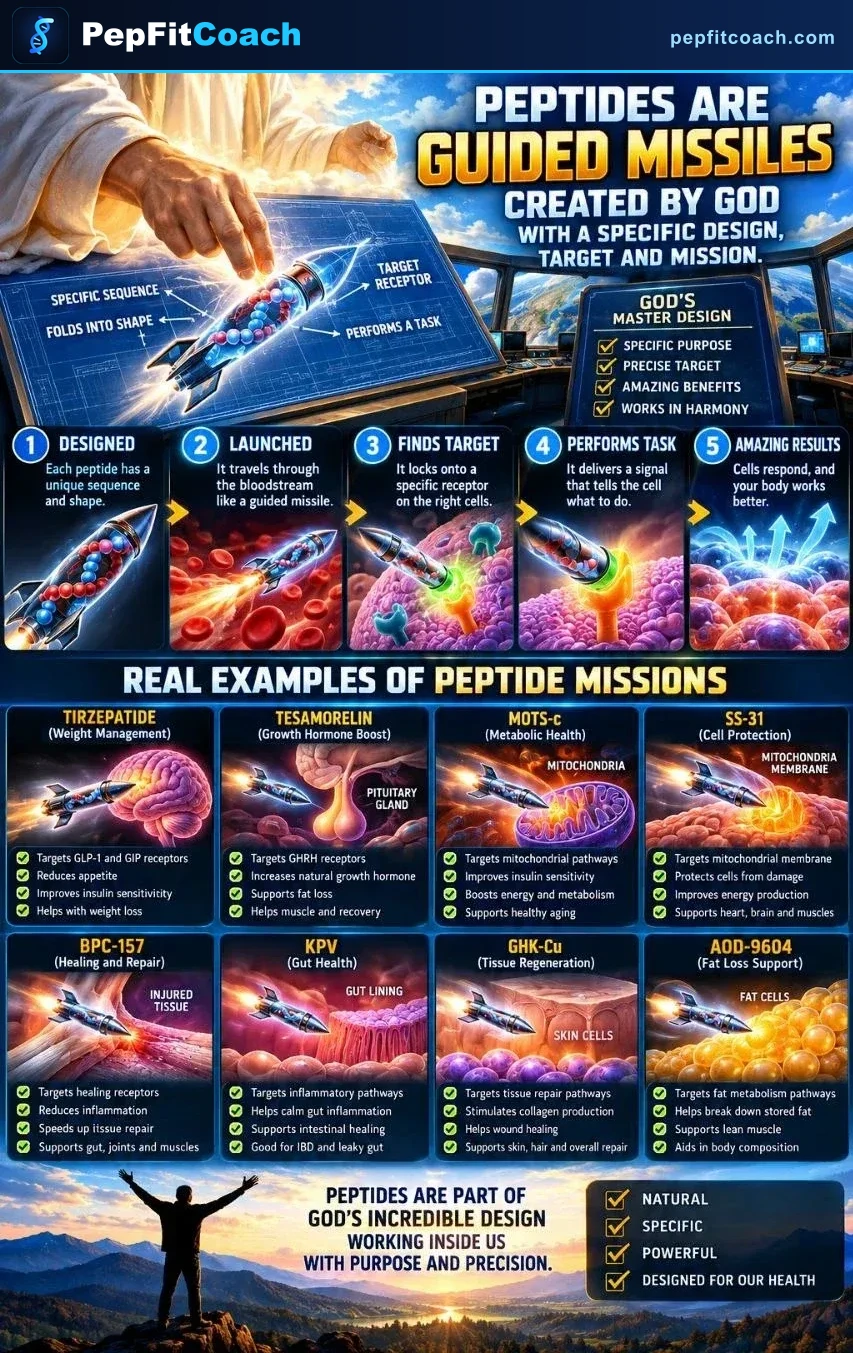
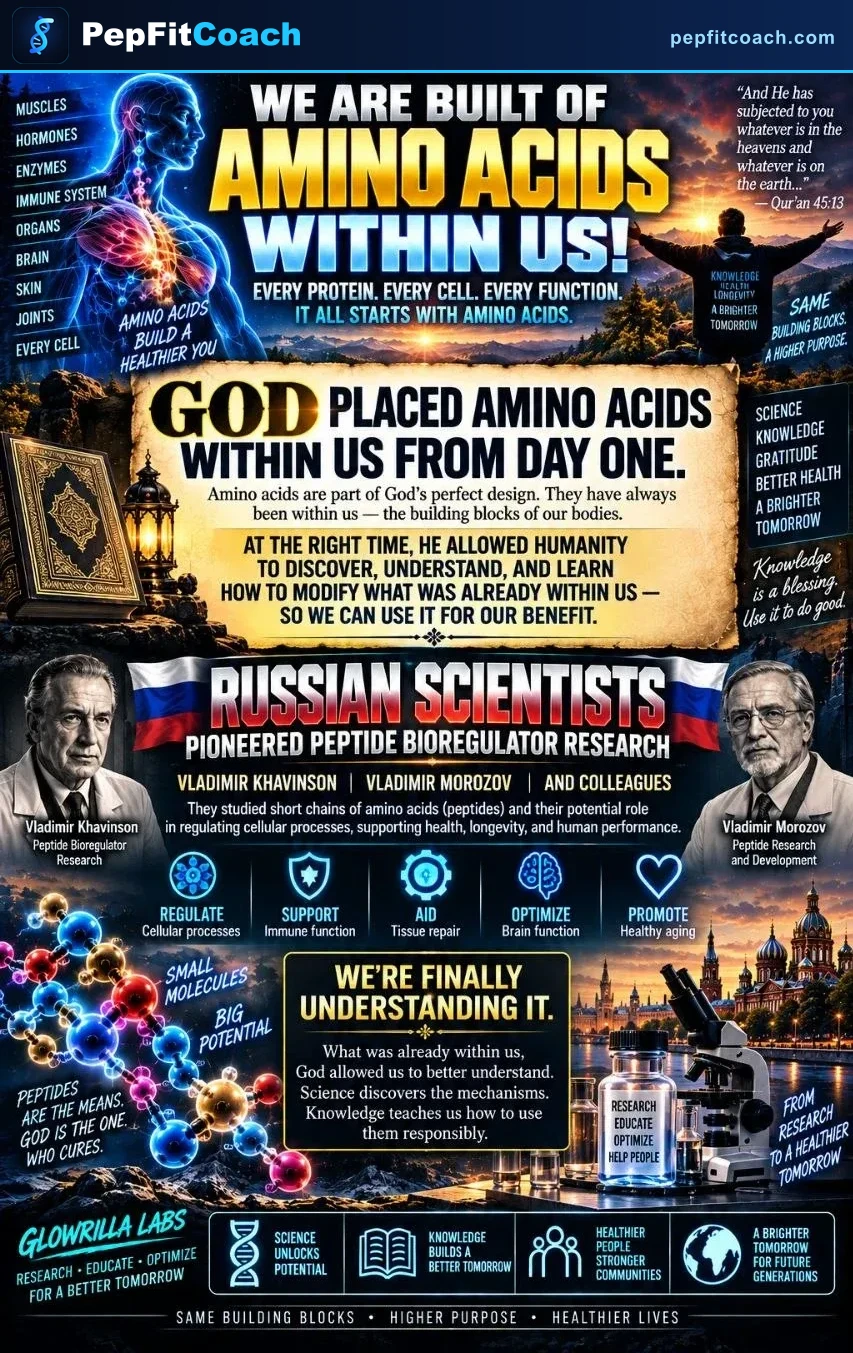
Infographics simplify the science. For most research peptides, the effects shown come mainly from animal and lab studies, not proven results in people; see each peptide's evidence level in the Peptide Index. Educational only, not medical advice.
Keep learning
Doctors to watch on peptides and GLP-1s
They're doctors, but they aren't your doctor. Watch their videos to learn and to come up with better questions, then decide anything about your own treatment with a clinician who knows your history and labs. Listing a channel isn't an endorsement of every claim; check what you hear against the evidence levels in the Peptide Index.
Dr. Greg Jones, NMD
Naturopathic medicine · peptides · hormone and metabolic health
Dr. Pescatore
GLP-1s · peptides · metabolic health; also covers finding a prescribing physician
Nick Norwitz, MD PhD
Metabolic health · cholesterol · nutrition science research
Dr. Michael Mueller
TRT and hormone optimization research
Bioavailable
New drugs · peptides · emerging therapies · evidence-first
Dr. Trevor Bachmeyer
Doctor · speaker · podcast host · peptides · metabolic health (his YouTube channel was removed)
Dr. Amin Hedayat
Research · peptides · longevity · emerging science
Dr. Jones, DC
Holistic obesity · GLP-1s · peptides · metabolic health
Dr. Ashley Froese
"This Is Not Covered" · primary care physician · GHK-Cu · GLP-1s · peptides
Dr. Kevin Joseph
Board-certified internal and obesity medicine · GLP-1s · weight loss