Metabolic health
Why the scale gets stuck,
and how to unstick it.
Metabolic health
- 3
- Stressors that stall you
- 4
- Stages of insulin resistance
- 6
- Ways to break the cycle
Watch how it happens
Press play, or step through it at your own pace.
Step 1 of 9
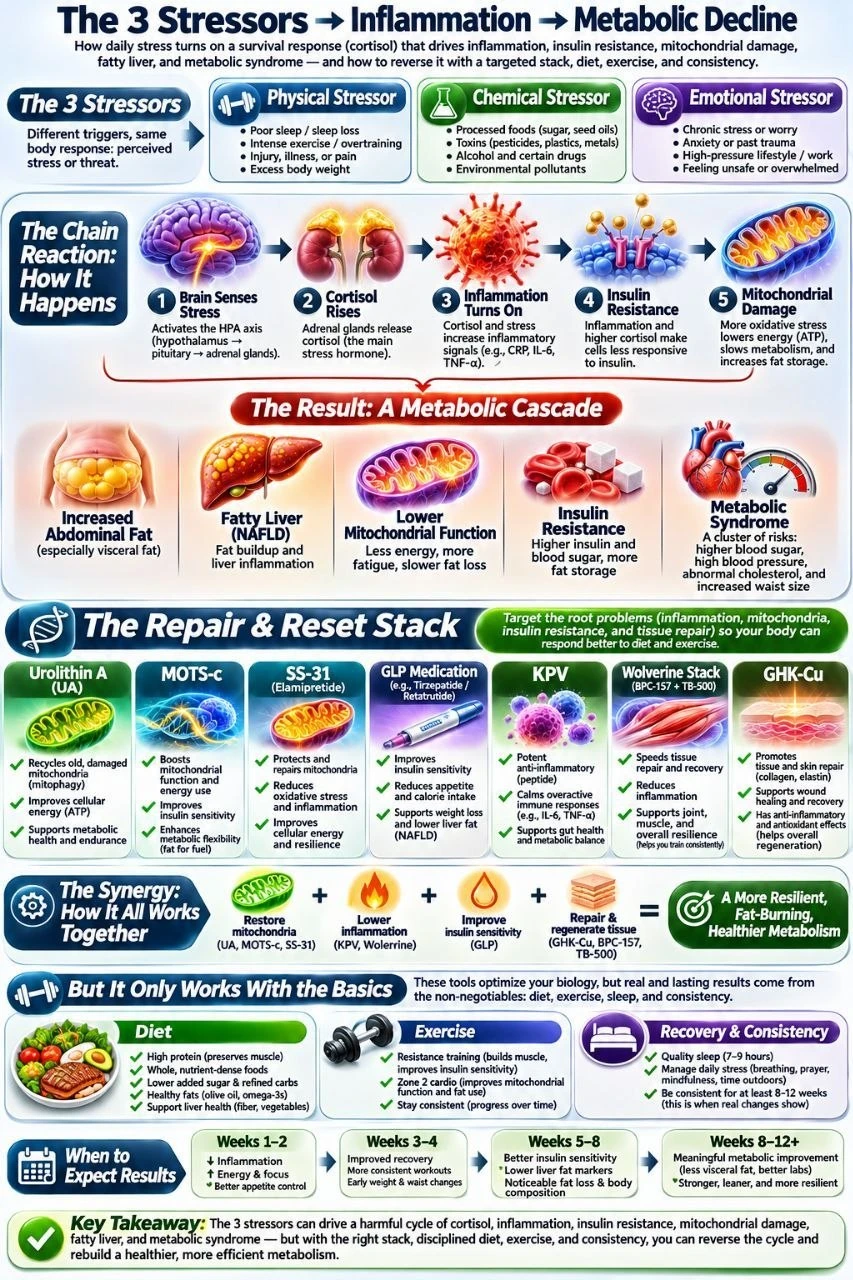
Stress comes in three kinds: your body (poor sleep, pain, overtraining), what you put in it (junk food, alcohol, toxins) and your mind (worry, pressure).
Why plateaus happen
Your body adapts
A smaller body burns fewer calories, and your body also turns its energy use down a little when you eat less. The same plan that worked at the start can stop working later.
Water hides fat loss
Stress, poor sleep, a new workout, salty meals or your menstrual cycle can hold several pounds of water for days or weeks, masking fat you've actually lost.
You're gaining muscle
Strength training can add muscle while you lose fat. The scale stays still, but your waist and clothes change. Measure your waist, not just your weight.
Small things creep back
Bigger portions, weekend snacking, liquid calories and moving less during the day (fewer steps) add up without you noticing.
Stress and insulin resistance
If cortisol stays high and your cells resist insulin, your body holds on to fat, especially around the belly, even when you diet and train hard. That's the cycle explained below.
The 3 stressors
Different triggers, same body response: your brain senses a threat and turns up cortisol.
Physical stress
- Poor sleep or sleep apnea
- Overtraining or too much intense exercise
- Injury, pain or illness
- Carrying excess body weight
Chemical stress
- Ultra-processed food high in sugar and refined fats
- Alcohol and recreational drugs
- Medication side effects: steroids, some antidepressants, antipsychotics and diabetes medicines can raise weight or blood sugar (ask your doctor; never stop a medicine on your own)
- Smoking and pollution
Emotional stress
- Ongoing worry or anxiety
- Unresolved trauma
- High-pressure work or home life
- Feeling unsafe or overwhelmed
How insulin resistance creeps up
It usually starts years before blood sugar looks abnormal, which is why the right blood tests matter.
Stage 1
Hidden: insulin works harder
Your cells start ignoring insulin, so your pancreas makes more. Blood sugar still looks normal, so routine checkups often miss it.
Tests: Fasting insulin rises; HOMA-IR climbs above about 2. Fasting glucose and HbA1c usually still normal.
Stage 2
Warning signs appear
Belly fat grows, energy dips after meals, cravings increase and fat starts building up in the liver.
Tests: Triglycerides up, HDL down, ALT (liver) creeping up, waist size increasing, blood pressure rising.
Stage 3
Prediabetes
Your body can no longer make enough insulin to keep blood sugar fully normal.
Tests: Fasting glucose 100–125 mg/dL or HbA1c 5.7–6.4%.
Stage 4
Type 2 diabetes
Blood sugar stays high. It's very treatable, and the earlier stages are often reversible with the right plan.
Tests: Fasting glucose 126 mg/dL or higher, or HbA1c 6.5% or higher.
See every test, what it means and a message to send your doctor in the bloodwork guide.
Mitochondrial damage
Mitochondria are the batteries in your cells. Constant stress, inflammation, poor sleep and inactivity make them produce less energy and more “exhaust” (oxidative stress). You feel tired, recover slowly and burn less fat. Zone 2 cardio and strength training are the best-proven ways to build more and healthier mitochondria.
Fatty liver
When insulin stays high, extra fat gets stored inside the liver. Doctors now call this MASLD (it used to be NAFLD). It often has no symptoms; a raised ALT on blood tests or an ultrasound may be the first clue. Losing 5–10% of your body weight can cut liver fat substantially.
Metabolic syndrome
You have it if you have 3 or more of these:
- Waist over 40 in (102 cm) for men or 35 in (88 cm) for women
- Triglycerides 150 mg/dL or higher
- HDL under 40 mg/dL (men) or 50 mg/dL (women)
- Blood pressure 130/85 or higher
- Fasting glucose 100 mg/dL or higher
How to break the cycle
These basics do the heavy lifting. Give them 8–12 weeks of consistency before judging results.
Sleep 7–9 hours
Short sleep raises cortisol and worsens insulin resistance within days.
Lift 3 times a week
Muscle is your biggest sugar sponge; more muscle means better insulin sensitivity.
Zone 2 cardio
Easy, steady cardio trains your mitochondria to burn fat for fuel.
Real food first
Protein and fiber at every meal; less sugar, refined carbs and alcohol.
Manage stress
Breathing, prayer or mindfulness, time outdoors and people who support you lower cortisol.
Test, don't guess
Repeat your bloodwork every 3 months while you're working on insulin resistance.
The “repair & reset stack”: what the evidence says
You'll see Urolithin A, MOTS-c, SS-31 and other peptides promoted online for mitochondria, inflammation and repair. Here is what each is actually supported by. Most are not approved medicines, and none replaces the basics above.
Urolithin A
HumanA compound your gut makes from pomegranates and berries, also sold as a supplement. Small human trials found better muscle endurance and markers of mitochondrial renewal.
Dietary supplement (not a drug)
MOTS-c
AnimalA peptide made by mitochondria. In animal studies it improved insulin sensitivity and exercise capacity. Human data is very limited.
Not approved; research only
Read more →SS-31 (elamipretide)
HumanBinds to the inner membrane of mitochondria. Studied in human trials for rare mitochondrial diseases with mixed results.
FDA-approved only for Barth syndrome
Read more →GLP-1 medicines
HumanSemaglutide and tirzepatide improve insulin sensitivity, lower appetite and reduce liver fat in large human trials. Semaglutide is also approved in the US for a form of fatty liver disease with liver scarring (MASH).
Prescription medicines (retatrutide still investigational)
Read more →KPV
AnimalA small peptide that calms inflammation in lab and animal studies, including gut inflammation.
Not approved; research only
Read more →BPC-157 + TB-500
AnimalOften sold together as a “Wolverine stack” for healing. Tissue-repair effects come from animal studies; there are no good human trials.
Not approved; on the WADA Prohibited List
Read more →GHK-Cu
In-vitroA copper peptide used in skin-care products. Collagen and wound-healing effects come mainly from lab studies and topical use.
Cosmetic ingredient; not an approved medicine
Read more →
Badges show the strongest kind of evidence available. Animal and lab results don't prove an effect in people. Unapproved peptides aren't checked for purity, dose or sterility. Talk to a licensed clinician before taking any of these; PepFit Coach does not provide doses for unapproved substances.
Low testosterone: what shuts it down
In simple words: the same stressors that cause insulin resistance also lower testosterone. Fixing them often raises it naturally. Before starting testosterone, ask your doctor about keeping your own production working.
Insulin resistance and belly fat
Fat tissue turns testosterone into estrogen, and high insulin lowers SHBG and the brain's signal (LH) that tells the testes to make testosterone.
Metabolic syndrome and type 2 diabetes
Men with these have low testosterone far more often. Low testosterone then makes it easier to gain fat: a vicious circle.
Chronic stress and high cortisol
Long-term high cortisol turns down the brain-to-testes signal (the HPG axis), so less testosterone is made.
Poor sleep and sleep apnea
Most testosterone is made during deep sleep. Short sleep or untreated sleep apnea lowers it.
Alcohol, opioids and some medicines
Heavy drinking, opioid pain medicines and some other drugs lower testosterone. Ask your doctor to review your list.
Eating too little or overtraining
Big calorie deficits and too much hard training without recovery can lower testosterone, including on a GLP-1.
The good news: losing belly fat, lifting weights, sleeping 7–9 hours, treating sleep apnea and lowering daily stress can all raise testosterone, often meaningfully.
Why TRT shuts down your own production
Your brain checks how much testosterone is in your blood. When testosterone comes from outside (gels, injections, pellets), the brain stops sending its signals (LH and FSH) to the testes.
Without those signals, the testes make much less of their own testosterone and sperm. That can mean smaller testes and lower fertility, and it can take months to recover after stopping, sometimes longer.
If you may want children, say so before starting TRT. It changes which options make sense.
Ask about these before TRT
For some men, especially younger men or those who want to keep fertility, doctors use medicines that make your body produce more of its own testosterone instead of replacing it:
- Enclomiphene or clomiphene block estrogen's brake on the brain, so it sends more LH and FSH and the testes make more testosterone and sperm. Clomiphene is used off-label for this; enclomiphene is not FDA-approved and is usually compounded.
- hCG acts like LH directly on the testes. It's sometimes used alone or alongside TRT to protect testicular function.
These are prescription decisions with their own side effects and monitoring (for example mood or vision changes, and blood count and estrogen checks). They don't suit everyone, and they don't work if the testes themselves are the problem. No doses are given here.
“TRT thickens your blood”: fact or fiction?Hematocrit is the share of your blood made of red blood cells.
With TRT: fact.
Testosterone tells your body to make more red blood cells. With TRT, hematocrit rising too high (thicker blood) is one of the most common side effects, especially with injections. Very thick blood may raise the risk of clots, though how much is still debated.
That's why guidelines check hematocrit before starting, at 3–6 months, then yearly, and your doctor lowers the dose or pauses treatment if it goes above about 54%.
With enclomiphene: much less common, but not zero.
Enclomiphene raises your own testosterone, usually into the normal range rather than above it, so big jumps in hematocrit are less common than with TRT. The research is smaller, so your doctor should still check a blood count.
Other things that also raise hematocrit: untreated sleep apnea, smoking, dehydration and living at high altitude.
Labs to ask your doctor about
- Total and free testosterone, drawn in the morning (repeat to confirm a low result)
- LH and FSH: show whether the problem starts in the brain or the testes
- Estradiol, SHBG and prolactin
- CBC (hematocrit), plus PSA when appropriate for your age
- Fasting glucose and insulin (HOMA-IR), HbA1c and lipids
Women make testosterone too, but testing and treatment are different; see why women need testosterone too. Educational only: PepFit Coach does not diagnose, prescribe or recommend doses.
Lymphatic drainage and vibration plates
In simple words: your lymphatic system is a second set of pipes that carries extra fluid and waste back to your blood. It has no heart to pump it; it moves when your muscles move and when you breathe deeply.
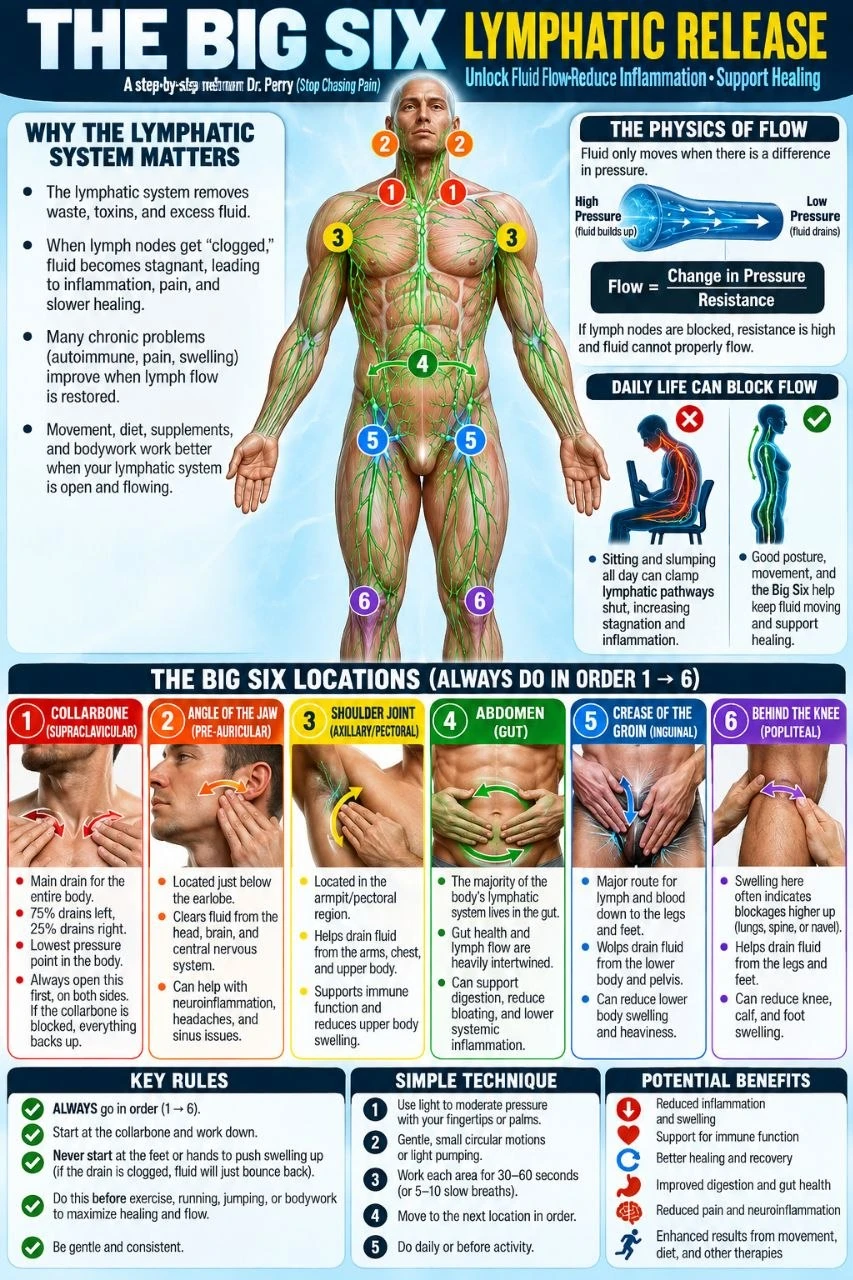
The Big Six: a gentle self-massage, in orderPopularized by Dr. Perry (Stop Chasing Pain). About 5 minutes.
- 1CollarboneThe main drain for the whole body. Always start here, both sides.
- 2Angle of the jawJust below the earlobe. Drains the head and neck.
- 3Armpit and chestDrains the arms, chest and upper body.
- 4BellySlow, gentle circles around the belly button.
- 5Groin creaseWhere the leg meets the body. Drains the legs and pelvis.
- 6Behind the kneeDrains the lower legs and feet.
- ✓ Always go in order, 1 to 6: start at the collarbone and work down. Starting at the feet just pushes fluid into a blocked drain.
- ✓ Use light pressure with your fingertips or palms, like stretching the skin, not kneading muscle.
- ✓ Small, slow circles for 30–60 seconds (5–10 slow breaths) per area.
- ✓ Do it daily, or before exercise.
What the evidence says: manual lymphatic drainage by a trained therapist is a proven part of treating lymphedema (for example after cancer surgery). For everyone else it's gentle and relaxing, and may ease mild puffiness. Claims that it detoxes the body, reduces inflammation everywhere or treats autoimmune disease are not proven.
How a vibration plate can helpMuscle pumping for your legs, with an important safety warning.
Standing on a vibration plate makes your leg muscles tighten and relax many times a second. That squeezing works like a pump for blood and lymph in the legs. Small studies show better leg blood flow and less swelling; evidence for lymph flow and other benefits is still limited.
- ✓ Bend your knees slightly. Never lock them: locked knees send the vibration up into your hips, back and head.
- ✓ Start on the lowest setting for 5–10 minutes, holding the handles or a counter.
- ✓ Good after the Big Six or after a long day of sitting.
⚠ Blood clot (DVT) warning
Do not use a vibration plate if you have, or recently had, a blood clot (DVT or pulmonary embolism): vibration could loosen a clot. Also ask your doctor first if you're pregnant, have a pacemaker or other implant, joint replacements, recent surgery, epilepsy, eye problems such as retinal detachment, or severe osteoporosis.
Stop and get medical help for calf pain, swelling or warmth in one leg, chest pain or sudden shortness of breath.
Not sponsored: I don't earn anything from this link. Pick one with handles and adjustable intensity.
Save the infographic
The 3 stressors and how they drive inflammation and metabolic damage, on one page. Download it to your phone or share it.
Download infographic